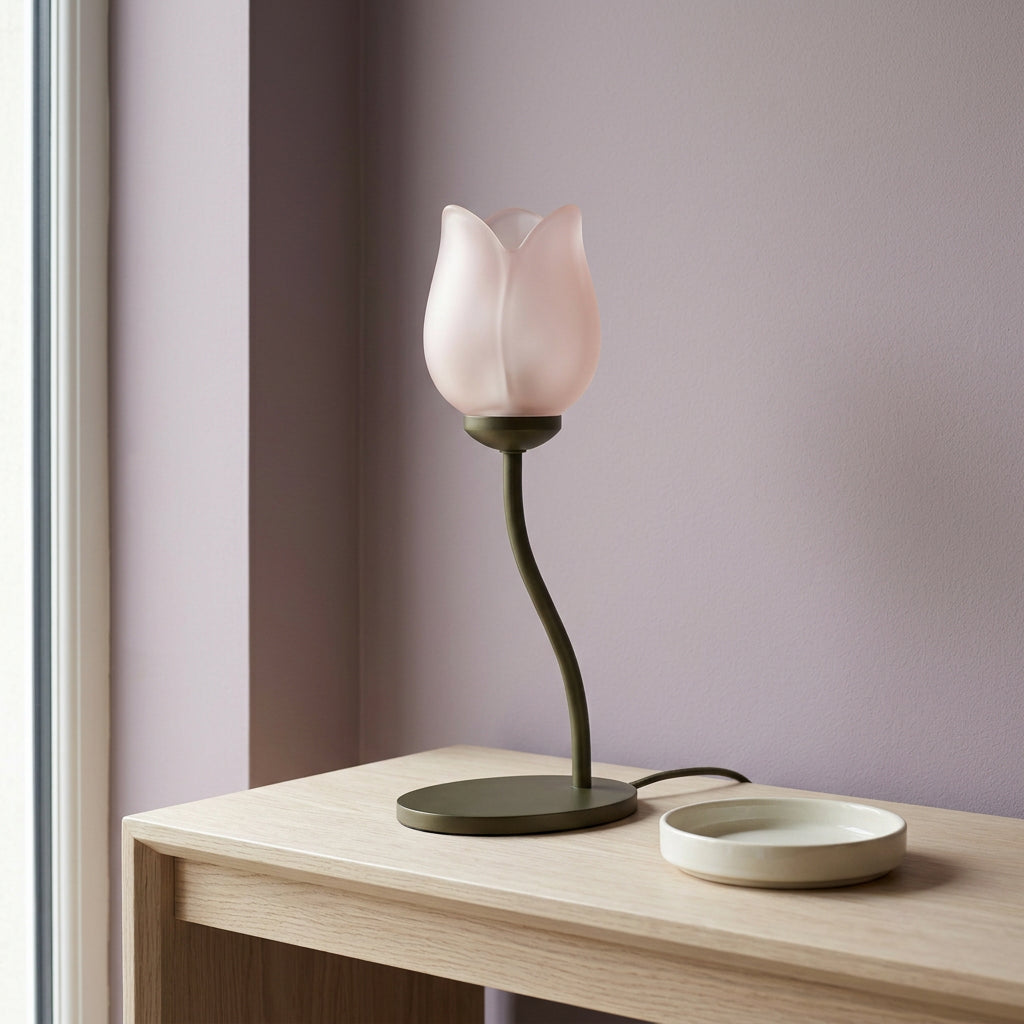
PETAL — Frosted Blush Tulip Accent Lamp with a Curved Olive Green Stem and Oval Base
PETAL — Frosted Blush Tulip Accent Lamp with a Curved Olive Green Stem and Oval Base
Couldn't load pickup availability

PETAL — Frosted Blush Tulip Accent Lamp with a Curved Olive Green Stem and Oval Base
A Little Bloom for Your Evening Ritual 🌷
Not every floral detail needs a pattern, and not every statement needs to be loud. PETAL translates the familiar outline of a tulip into a single, slender accent: a blush-colored flower form above a gently curved olive stem, grounded by a matching oval base. The result feels botanical without becoming a bouquet, and expressive without covering the table in decoration. It is a small visual invitation to slow down and notice the details of the space you use every day.

One Flower, No Extra Flourishes
PETAL keeps the botanical idea concentrated in a single bloom. There are no branching arms, added leaves, or repeated flowers turning the silhouette into a miniature bouquet. The pale shade carries the expressive part of the design, while the darker curved stem gives it direction. That restraint is important in a smaller tabletop arrangement. You can recognize the tulip reference immediately, but the lamp does not need a themed room to feel at home. It can sit beside plain bedding, a simple mirror, or an ordinary stack of books without asking everything around it to become floral too.

Before the Day Begins
On a vanity, the pale pink shade introduces a soft note of color among the objects of an everyday routine. The darker stem keeps that pink from feeling overly sweet, while the open space around the curve gives the whole silhouette a sense of movement. Pair it with a simple olive tray or light wood surface rather than a collection of flower-shaped accessories. One botanical gesture is enough. Let the shape provide the character and keep the surrounding arrangement calm.

Look at the Petals from the Side
The flower is not a flat outline. Its upper edges rise and dip, and the surfaces curve inward and outward as they move around the shade. The frosted appearance softens the way highlights travel across the pink, making the contours feel less sharply reflective than a glossy surface would. In the illuminated styling, the center is visually brighter while the outer petal shapes remain discernible. In the added daylight scene, the pink and the flower form take the lead instead. Compare both views to see how the same silhouette contributes to the arrangement at different times.

The Curve Below the Bloom
Follow the line from the flower downward and the stem moves gently sideways before reaching the oval foot. That bend gives the object a relaxed gesture rather than the formality of a straight column. Olive green provides a darker counterweight to the blush shade, so the base and stem remain visible against pale walls and linens. The foot repeats the softness of the flower through its rounded outline, but stays visually simple. It is a supporting shape, not a second ornament. This distinction keeps the focus on the bloom and the uninterrupted curve beneath it.

When Evening Comes Around
In the bedside styling, the illuminated flower becomes the visual focus against cream and dusty rose tones. Its frosted appearance gives the petal contours a gentle, softened definition, while the darker support remains clearly outlined below. This contrast is what makes PETAL more than an all-pink decorative object: the green brings depth, the pale shade brings lightness, and the curve connects the two. A folded linen throw or a single book is all the company it needs in a thoughtfully composed bedside scene.

A Bedside Ritual with Room for Real Life
Start with what you actually keep beside the bed: perhaps a book, a small dish, and a folded pair of glasses. Position those objects so they do not obscure the lamp's base or cross in front of the stem. Let the bloom sit against a relatively plain part of the wall or headboard, where its petal edges can be seen clearly. Dusty rose bedding creates a related palette; cream offers more separation; muted olive introduces continuity with the support. Choose one approach rather than using every color in equal amounts. The effect should feel lived in, not arranged for a special occasion.

The Details That Make the Flower Feel Considered
Look at the upper edge, where the petal shapes rise and dip instead of forming a flat rim. Follow the stem downward and the line bends gradually, without added leaves or branching arms. At the bottom, the oval foot repeats the softness of the flower without copying its shape. These choices keep the design cohesive. There is one bloom, one curved support, and one grounding form, allowing each part to remain easy to understand at a glance.

At the Vanity, Keep the Flower in Focus
A pale wood surface and a low tray make a useful starting point. Place the tray a little away from the foot so both outlines remain visible. If there is a mirror nearby, avoid positioning its frame directly through the center of the flower's reflection; an offset composition is often calmer. Choose plain containers rather than several sculptural bottles competing with the bloom. The lamp supplies the expressive shape, so the surrounding objects can stay practical. For an unexpected color relationship, use a warm lavender wall behind the blush and olive instead of repeating the pink across the whole surface.
A Thoughtful Gesture, Beautifully Presented
The accompanying gift-styling photograph explores a simple blush box and pale fitted insert, with the lamp left clearly visible rather than hidden beneath ribbons or printed decoration. That understated palette is also a useful styling cue for the room itself: blush, ivory, and olive need very little else. Whether you are choosing a botanical accent for your own bedside or considering a personal housewarming gesture, PETAL offers a distinctive visual starting point. Give it a little open space and let the single flower do the talking.
A Personal Gift Starts with Knowing Their Space
For someone who enjoys botanical details, consider the colors they already use before deciding how to style this piece. A room with natural linen and pale wood offers one direction; a dressing table with mauve and olive offers another. The unbranded blush presentation in the gallery is a visual packaging proposal, not a promise of supplied gift packaging. Its restrained colors still offer a useful idea: let the flower remain the detail people notice first. Whether the lamp is being considered for your own corner or as a thoughtful gesture, its appeal comes from that clear, single-bloom identity rather than an abundance of decoration.